What Does Modulus Mean in Silicone Sealants?
In simple terms, modulus refers to how much a silicone sealant resists deformation when a force is applied.
Low modulus silicones are more flexible, they stretch and compress with minimal force.
High modulus silicones are stiffer, they resist movement and provide a stronger, firmer bond.
This matters because building joints and materials behave differently in real world conditions. Temperature changes, vibration, wind loads and material movement all affect the performance of a sealant. Choosing the wrong type can lead to failure, cracking or loss of adhesion.
Low Modulus Silicone — Designed for Movement
Low modulus silicones are engineered to absorb and adapt to material movement. They stretch more easily and return to shape without breaking adhesion. Typically, they can handle movement levels of 25–50%, depending on the formulation.
Because of their flexibility, low modulus silicones place minimal stress on substrates. This reduces the chance of damage as materials expand and contract which is a major benefit in many external and structural applications.
Industry Applications Include:
- Window and door frames – accommodates expansion in frames without cracking
- Curtain walls and facades – manages thermal and structural movement between glass, metal and masonry
- Roof and cladding joints – withstands thermal cycling
- Concrete and expansion joints – retains flexibility under load
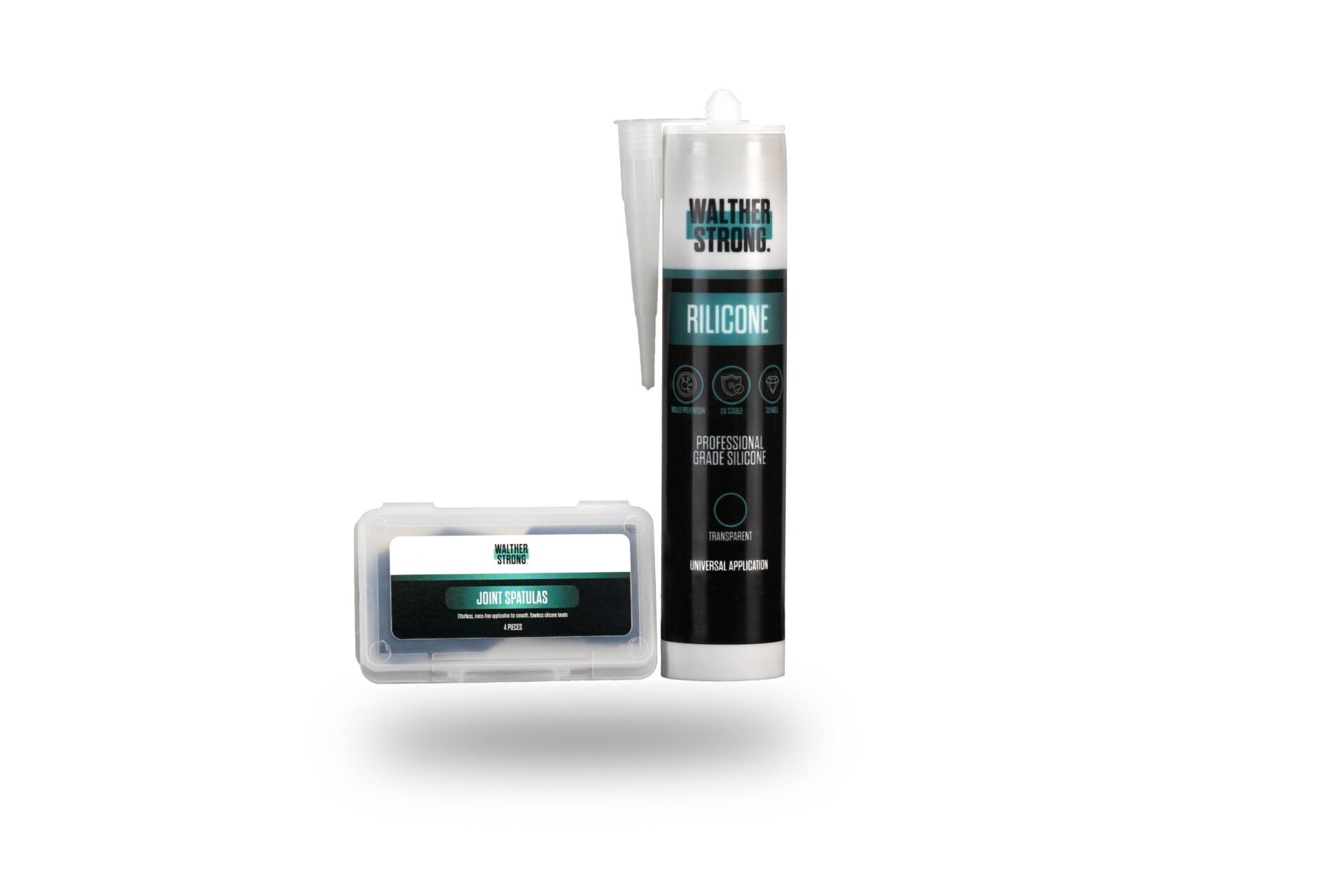
At Walther Strong, our Rilicone range includes high-performance low modulus grades trusted for both internal and exterior applications. We also supply BEKO Pro4 silicone sealants, engineered to consistently meet demanding performance standards where flexibility is key.
High Modulus Silicone — Designed for Strength
In contrast, high modulus silicones are more rigid and offer greater resistance to deformation. They tend to accommodate less movement (generally 10–25%) but provide stronger adhesion and mechanical durability, making them suitable for applications where movement is minimal and strength is paramount.
High modulus silicones are common in:
- Glazing bead bonding
- Structural sealant glazing
- Areas where load bearing is required
- Fixing where joint movement is low
| Feature |
Low Modulus Silicone |
High Modulus Silicone |
| Flexibility |
Highly flexible |
Relatively stiff |
| Movement Capability |
25–50% |
10–25% |
| Stress on Substrate |
Low |
Higher possible stress |
| Best For |
Areas with frequent movement |
Rigid joints and structural glue-ups |
| Common Use |
Facades, windows, joints |
Glazing, fixtures, bonding |
Tools and Accessories That Improve Application
At Walther Strong, we believe great results come from both the right product and the right tools.
Joint Spatulas – Precision finishing tools for a clean, professional bead every time
Smoothing Spray – Makes tooled silicone joints smoother and reduces tack for faster, cleaner tooling
These finishing aids complement our silicone sealants, saving time on site and improving quality.
Why Choose Walther Strong for Silicone Sealants?
Walther Strong is one of the UK’s leading suppliers of tapes, adhesives and silicones, trusted by professionals across multiple industries. When you choose us you get:
✅ Expert product knowledge
✅ Comprehensive silicone solutions (including Rilicone + BEKO Pro4)
✅ Quality tools and accessories
✅ Customer support and technical guidance
Ready to choose the right silicone for your next project?
Explore our range of silicone sealants, joint tools and accessories and talk to our team if you need help specifying the best solution.