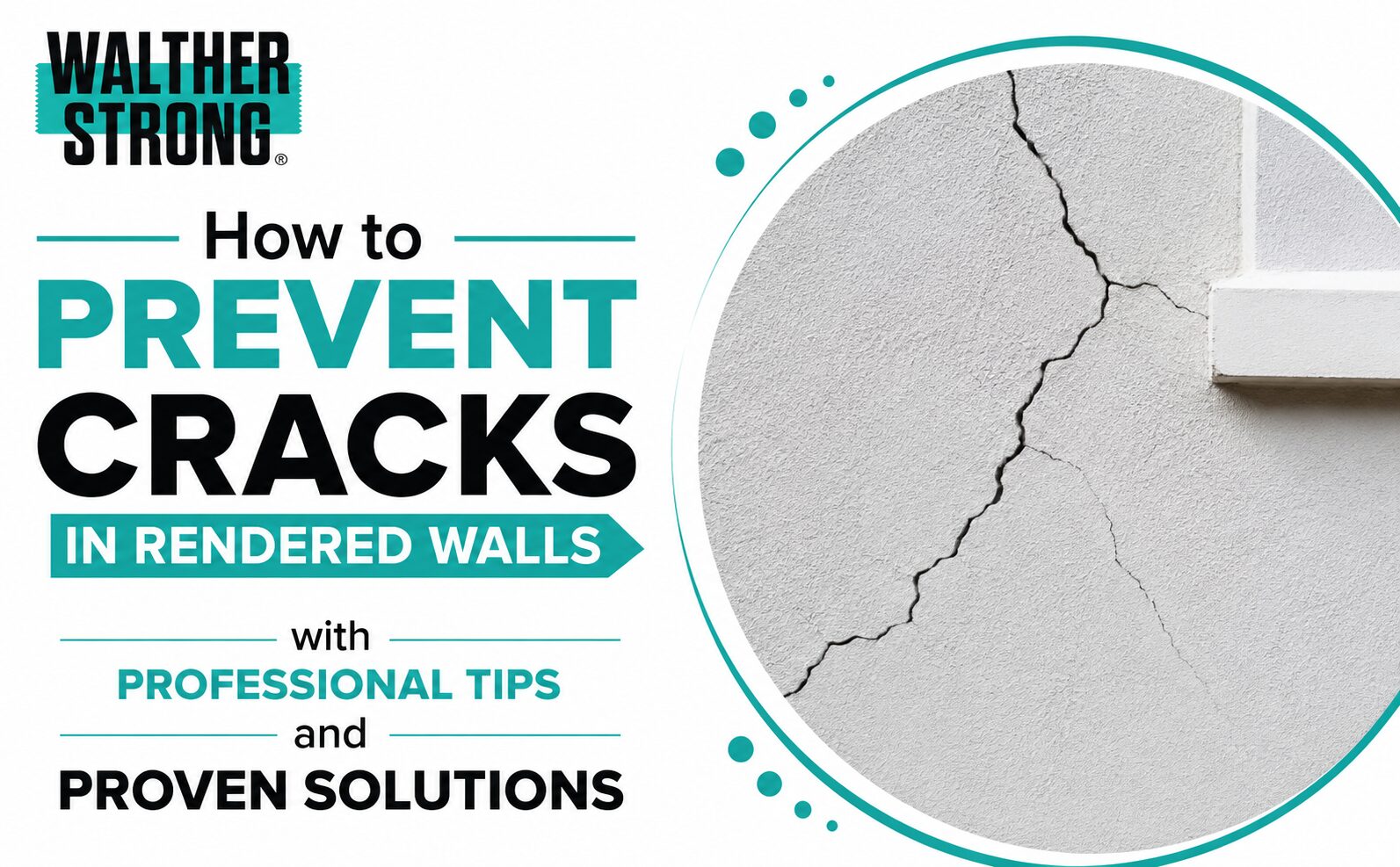
Why Do Rendered Walls Crack?
Before learning how to prevent cracks in rendered walls, one should first understand what causes them.
Several factors contribute to cracking, including:
- Poor substrate preparation
- Building movement and settlement
- Thermal expansion and contraction
- Moisture penetration
- Incorrect render mix ratios
- Rapid drying during application
- Lack of reinforcement
- Ageing and weather exposure
Cracks do not form suddenly. They usually form gradually due to stress on the render system.
Ways to Avoid Cracks in Rendered Walls:
Prepare the Surface Properly Before Rendering
One of the biggest reasons rendering fails is inadequate surface preparation.
Professional installers always inspect the substrate before applying render. The wall should be:
- Clean and free from dust
- Structurally sound
- Dry but not excessively dry
- Free from loose paint or previous coatings
- Evenly textured for proper adhesion
Different surfaces such as brick, concrete blocks, insulation boards, and existing render require different preparation methods. Skipping this stage often leads to poor bonding, increasing the likelihood of future cracks.
Choose High-Quality Rendering Materials
All rendering materials do not have the same flexibility and longevity qualities. Professionals always use the best rendering systems that can withstand:
- Temperature changes
- Moisture exposure
- UV radiation
- Structural movement
Using high-quality materials helps in render crack prevention by reducing shrinkage during curing. Cheap materials may save money initially but often require costly repairs within a few years.
Use the Correct Render Mix
Another big reason for cracking of render is the wrong mixing ratio. If the render mixture has more cement, it becomes hard and brittle. On the other hand, excess sand in the mixture makes it weak. The right render mix includes the following components:
- Cement
- Sand
- Lime (where applicable)
- Polymer additives
- Water
Proper mixing improves flexibility, adhesion, and overall durability.
Reinforce Render with Mesh
One of the most effective ways to prevent cracking is by reinforcing the render system.
Using high-quality render mesh distributes stress across the rendered surface, reducing the risk of shrinkage cracks and movement-related damage.
Mesh reinforcement is particularly valuable for:
- External insulation systems
- Large wall areas
- Junctions between different materials
- Areas around windows and doors
- High-stress corners
Professional renderers consider reinforcement an essential component rather than an optional extra.
Install Expansion Joints Where Needed
Buildings naturally expand and contract with seasonal temperature changes.
Without expansion joints, stress accumulates within the render until cracks appear.
Expansion joints allow controlled movement while protecting the rendered finish.
These joints are especially important for:
- Long wall elevations
- Commercial buildings
- Large rendered facades
- Buildings with different construction materials
Correct joint placement significantly contributes to long-term render crack prevention.
Avoid Rapid Drying
Render requires enough drying time to gain full strength. Shrinkage cracks can be caused by quick drying of render due to the following reasons:
- Hot weather
- Strong sunlight
- Wind
- Low humidity
Professional installers often:
- Work during suitable weather conditions
- Lightly mist fresh render if required
- Protect walls using temporary sheeting
- Avoid applying render in direct midday sun
Proper curing greatly improves the finished result.
Control Moisture Levels
Another important cause of render damage is moisture. Water entering through small cracks can:
- Freeze during winter
- Expand inside the render
- Cause larger cracks
- Lead to delamination
Prevent moisture problems by:
- Repairing roof leaks
- Maintaining gutters
- Sealing around windows
- Ensuring proper drainage
- Keeping damp-proof courses functional
Moisture management extends the life of rendered surfaces.
Reinforce High-Stress Areas
Some parts of a building experience greater stress than others, for example:
- Window corners
- Door openings
- Building corners
- Wall junctions
- Structural joints
Using fibreglass render mesh or other suitable reinforcement materials in these locations helps distribute stress before cracks develop.
Professionals always pay special attention to these vulnerable areas during installation.
Allow the Building to Settle
New buildings naturally settle during the first few years after construction. Rendering too early may result in movement-related cracks.
Where possible, builders allow sufficient settlement before applying the final render finish. If early rendering is unavoidable, flexible render systems combined with wall reinforcement mesh help minimise cracking caused by structural movement.
Select Flexible Modern Render Systems
Traditional cement render is relatively rigid.
Modern polymer-modified renders offer greater flexibility, allowing them to absorb minor building movement without cracking.
Benefits include:
- Higher elasticity
- Improved weather resistance
- Better adhesion
- Reduced shrinkage
- Longer lifespan
Many professionals now recommend flexible systems for both residential and commercial projects.
Carry Out Regular Maintenance
Even the highest-quality render benefits from routine inspections.
Property owners should check rendered walls at least once each year for:
- Hairline cracks
- Discolouration
- Water staining
- Bulging
- Loose render
- Algae growth
Small defects can often be repaired before they become major structural problems. Preventive maintenance remains one of the most cost-effective render repair solutions available.
Repair Small Cracks Early
Ignoring small cracks rarely makes them disappear. Instead, moisture enters the wall, making repairs more extensive later. Professional render repair solutions vary depending on the size of the damage.
Here are some common types of cracks and ways to address them:
Hairline Cracks
These can often be repaired using:
- Flexible masonry fillers
- Acrylic repair compounds
- Surface coatings
Medium Cracks
Larger cracks may require:
- Crack widening
- Cleaning
- Flexible repair mortar
- Localised rendering
Extensive Damage
Where widespread cracking occurs, contractors may recommend:
- Removing damaged render
- Installing reinforcement mesh for rendering
- Applying a completely new render system
Professional assessment ensures the correct repair approach is used.
Avoid Mixing Different Render Systems
Combining incompatible rendering materials often creates weak points.
Some examples of incompatible mixing include:
- Cement render over flexible acrylic render
- Lime render over unstable substrates
Professionals usually install complete rendering systems designed to work together, reducing the risk of future cracking.
Protect External Walls from Impact
External walls frequently suffer accidental damage from:
- Garden equipment
- Vehicles
- Ladders
- Building work
Sometimes even small collisions can produce invisible defects that will eventually lead to cracks. Try to protect susceptible areas, especially around driveways and pathways.
Work with Experienced Rendering Professionals
DIY rendering can seem like an easy task to undertake, but professionals can make a huge difference.
Experienced contractors understand:
- Correct substrate preparation
- Proper curing techniques
- Suitable weather conditions
- Reinforcement placement
- Material compatibility
- Expansion joint positioning
Professionals reduce the chances of future cracking and deliver a more durable finish.
Final Thoughts
Understanding how to prevent cracks in rendered walls goes far beyond choosing a render finish. The success of the project depends not only on surface preparation but also on using high-quality materials and the correct application process.
Applying the above-mentioned render crack prevention tips will help you prevent any possible damages as well as reduce costs for repairs. In case there are cracks on your wall, you need to fix them with render repair solutions right away.
Need high-quality reinforcement materials for your rendering project? Check out our premium render mesh designed specifically for rendering applications. It offers dependable reinforcement for modern rendering systems, helping create stronger, longer-lasting walls that are better protected against cracking and everyday structural movement.